Pom was created to help people with GI conditions be more confident in their food choice
Highlights
I really enjoyed creating my own product, from scratch. Being a part of Pom from the beginning was truly an honour and a pleasure. I would definitely do this again, for the right idea and with the right team!
Challenge
Hundreds of thousands of people in the UK have to be very careful of the foods they eat, thanks to gastrointestinal conditions such as IBS, Crohn’s, Colitis or Coeliac. Getting it wrong can lead to humiliating accidents or week with no energy. It’s no wonder that your choice of food narrows to what is safe.
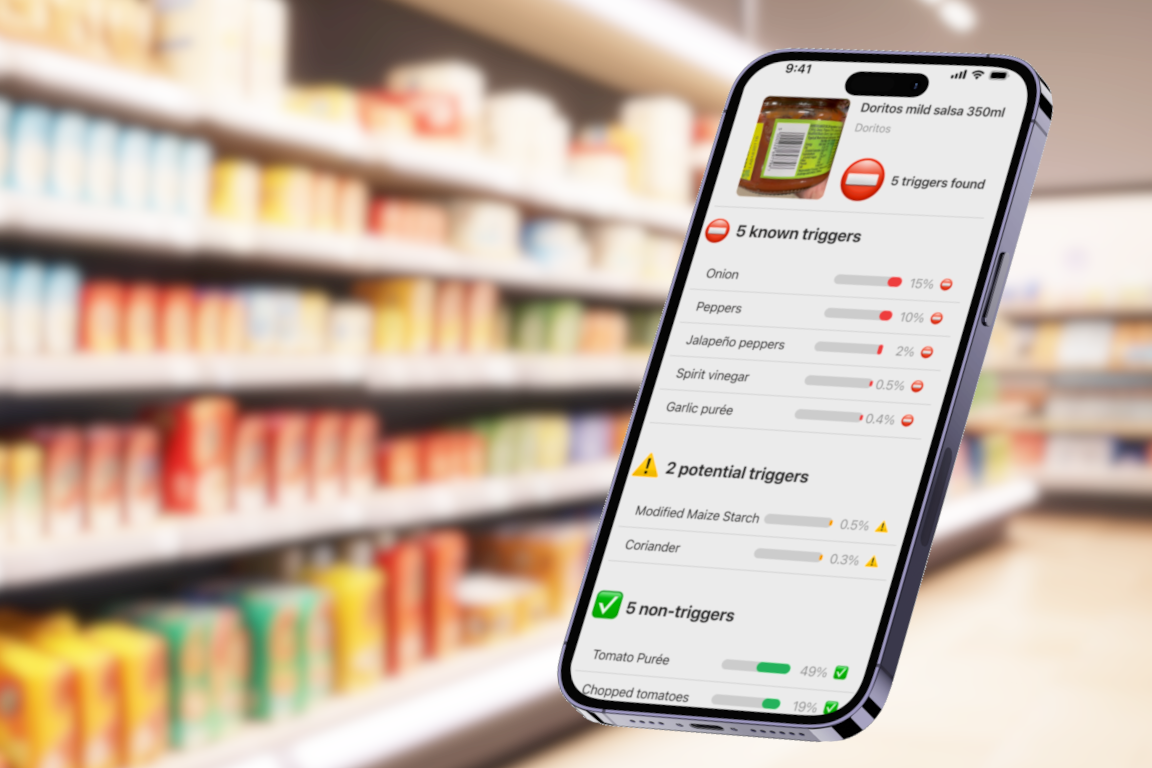
Pom brings peace of mind, by scanning barcodes and telling you if a product contains anything that might set you off.
Ingredients lists on product packaging can be difficult to read. Only allergens are highlighted by law, which are not the same as the many different ingredients that can trigger an adverse reaction in someone with a GI condition.
The inception of Pom happened when it was shortlisted for the 2023 Sync the City business hackathon in Norwich. After the event, three of us got together to investigate this promising idea further.
Action
Our priority was to ensure that people actually wanted this product, and we aimed to find that out through rigorous user research. I designed and built a website and posted on social media to invite people to join our user panel.
We ran some surveys with the user panel to check we were on the right track, and conducted interviews with people with GI conditions. Through all this, we were wanted to know how we could provide value to them as early as possible.
We spoke to charities, healthcare practitioners and other companies in the health-tech space to build a network of supporters and publicise our efforts.
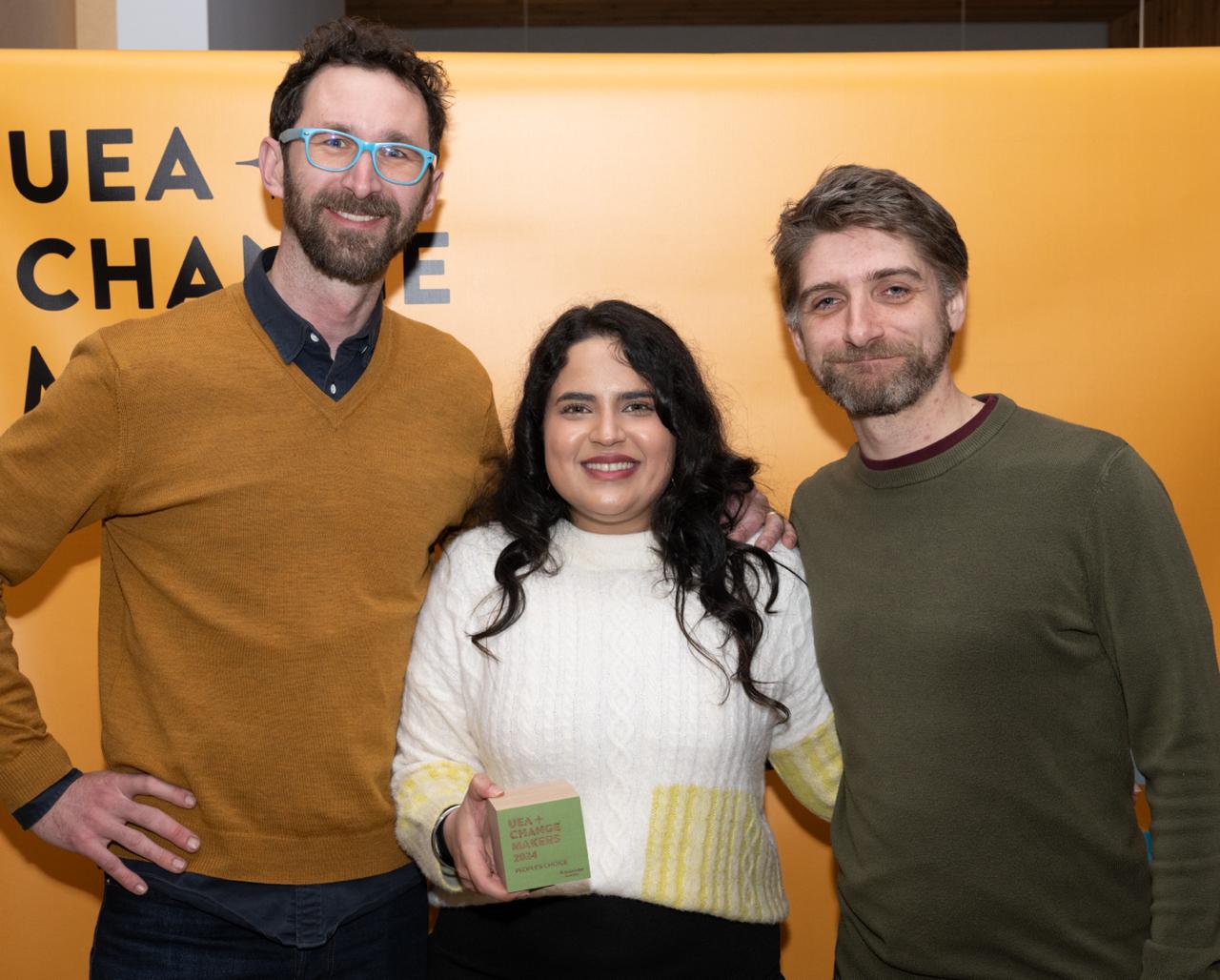
I created a mobile app UI in Figma, and worked with our lead developer to implement an MVP. We released this on Android and iOS, and invited our user panel to test it.
We were able to see the interactions that our users had through the in-app analytics. I followed up with interviews, always trying to determine if we had hit the mark with our value proposition. When I was able to meet people in person I conducted usability tests with them to more precisely identify points of friction.
Output
- Website
- User panel
- Surveys
- Interviews
- Mobile app UI design in Figma
- iOS and Android app
- Usability testing
Outcome
Ultimately, after a year, we decided not to proceed with Pom.
Although there were promising directions we could have taken the app in, and it did seem to provide value to users, we as a team were not able to prioritise the intense investment of time and energy that creating a start-up from scratch requires.

